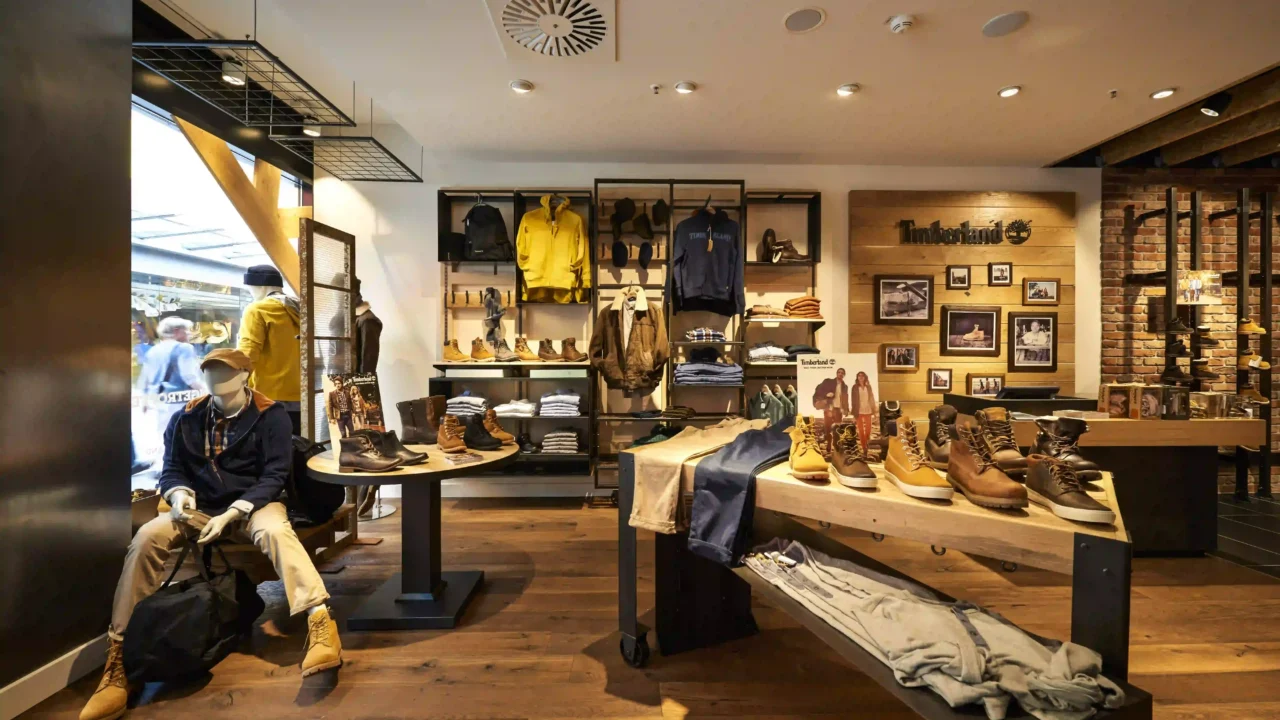

Retail store execution is one of the most important stages in launching a successful retail business. Even the best store designs, branding strategies, and product plans fail if the execution on-site is weak. A well-executed store enhances customer experience, improves sales conversions, and builds strong brand identity.
This complete guide explains everything about retail store execution—what it means, the step-by-step process, key challenges, modern trends, quality standards, and what brands must consider to achieve a smooth, professional execution.
1. What Is Retail Store Execution?
Retail store execution is the end-to-end process of converting an approved store design into a fully functional retail space. It includes:
- Civil and interior works
- Fixture production and installation
- Electrical and lighting setup
- Branding installation
- Quality control
- Final site handover
In simple terms:
Retail store execution is the journey from design approval to opening the store for customers.
2. Why Good Store Execution Matters
A retail store is the face of a brand. Quality execution impacts:
✔ First impressions
Customers judge a store within seconds.
✔ Brand trust
A clean, well-built store reassures buyers.
✔ Sales performance
Good lighting, layout, and visibility improve conversions.
✔ Operational efficiency
Proper electrical, storage, and fixture placement reduce daily issues.
✔ Store longevity
Good execution reduces maintenance costs for years.
Poor execution leads to frequent repairs, customer complaints, and loss of brand reputation.

3. The Entire Retail Store Execution Process (Step-by-Step)
Below is the complete flow followed by professional retail fit-out companies.
Step 1: Site Survey & Requirement Collection
A precise survey ensures accurate execution.
- On-ground measurements
- Checking MEP (Mechanical, Electrical, Plumbing) points
- Studying mall/market conditions
- Understanding space constraints
- Photographing the entire site
Survey data becomes the foundation for execution planning.
Step 2: BOQ & Material Planning
The Bill of Quantities (BOQ) is prepared based on:
- Approved design
- Materials to be used
- Fixture standards
- Cost estimates
- Timeline requirements
Material planning helps avoid shortages and delays.
Step 3: Procurement & Vendor Scheduling
This includes:
- Raw material purchasing
- Allocating work to fabrication units
- Scheduling deliveries
- Verifying quality of incoming materials
Efficient procurement is essential for timely execution.
Step 4: Fixture Fabrication
In workshop:
- Metal & wooden fixtures are fabricated
- Polish, laminate, PU finishes applied
- Glass is cut and prepared
- Lighting components integrated
Top companies conduct pre-QC before dispatching fixtures to the site.
Step 5: On-Site Civil & Interior Works
This includes:
- Flooring
- Carpentry
- Electrical wiring
- Plumbing
- False ceiling
- Painting
- Wall finishes
Each work must follow the design blueprint and brand standards.
Step 6: Fixture Installation
Delivered fixtures are installed on-site:
Proper alignment and leveling are key to perfect finishing.
Step 7: Branding & Lighting Setup
Branding elements include:
- Signages
- Vinyl graphics
- Posters
- LED boards
- Digital screens
Lighting includes:
- Spotlights
- Track lights
- LED strips
- Ambient lights
Correct lighting enhances product display and overall mood.
Step 8: MEP Final Checks
Before handover, the execution team verifies:
- Electrical load
- Fire safety compliance
- HVAC functioning
- CCTV and IT points
- Earthing and wiring safety
This ensures smooth store operations.
Step 9: Quality Check & Snag Removal
Brands expect a snag-free store. Final QC includes:
- Checking finishing
- Eliminating scratches
- Ensuring fixture alignment
- Verifying paint quality
- Fixing loose joints
- Cleaning and polishing
A snag report is prepared and all points resolved.
Step 10: Final Handover
The retail store is handed over with:
- Walkthrough
- Documentation
- Warranty details
- Site photographs
- Final sign-off from the brand
The store is now ready for merchandising and launch.
4. Key Challenges in Retail Store Execution
Retail execution is complex. Common challenges include:
1. Tight Deadlines
Mall schedules and brand launch plans require high speed.
2. Material Delays
Late procurement leads to project slowdowns.
3. Labour Management Issues
Uneven manpower affects daily progress.
4. Coordination Gaps
Design, vendor, and execution teams must remain aligned.
5. Budget Deviations
Improper planning leads to overruns.
6. Quality Inconsistency
Each store requires uniform finishing standards.
7. Mall Compliance
Improper documentation causes work stoppages.
A professional execution partner eliminates these issues.
5. What Makes Retail Store Execution Successful?
Successful execution requires:
✔ Strong project planning
Clear timelines and responsibilities.
✔ Efficient procurement system
Materials ready at the right time.
✔ Skilled workforce
Experienced carpenters, painters, electricians, and supervisors.
✔ Daily reporting
Keeps the brand informed at every stage.
✔ Pre-fabrication
Reduces on-site work and speeds up execution.
✔ Quality checklists
Standardizes outcomes across multiple stores.
✔ Technology integration
Digital tools for tracking progress and monitoring.
6. Modern Trends in Retail Store Execution
Retail execution is evolving. Popular trends include:
1. Modular Fixtures
Fast installation + easy replacement.
2. LED-based Lighting
Energy-efficient, premium ambience.
3. Sustainable Materials
Eco-friendly boards, paints, and finishes.
4. Pre-Engineered Components
Reduce on-site errors and time.
5. Digital Integration
Screens, sensors, and interactive displays.
6. Minimalistic Store Finishing
Cleaner look, strong product visibility.
7. Choosing the Right Retail Execution Partner
Brands must select a partner with:
- Proven experience in retail
- Strong fabrication capability
- Skilled workforce
- Transparent project reporting
- Ability to meet deadlines
- Quality assurance systems
- Nationwide execution capability
The right partner ensures the store is delivered with speed, precision, and brand consistency.
Conclusion
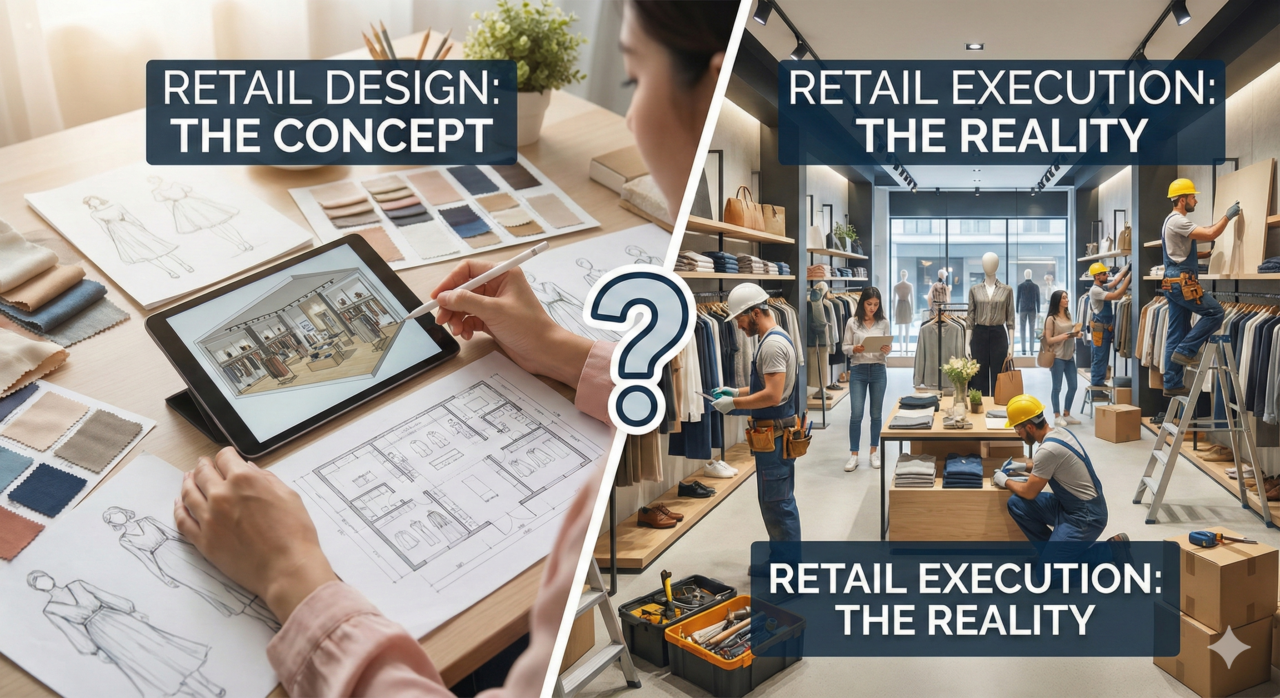
Retail store execution is a structured blend of planning, fabrication, installation, coordination, and quality control. It transforms a 2D design into a physical store that attracts customers, delivers a great shopping experience, and strengthens brand identity.
With the right execution process and professional fit-out partner, brands can ensure that every store opens on time, looks premium, and performs well from day one.
Execution is not just construction—
It is the foundation of successful retail.
Frequently Asked Questions (FAQs)
What is retail store execution?
Retail store execution is the complete process of converting an approved store design into a fully operational retail space. It includes civil and interior works, fixture installation, electrical and lighting setup, branding execution, quality checks, and final handover.
Why is retail store execution critical for store success?
Good store execution ensures strong first impressions, smooth customer movement, better product visibility, operational efficiency, and long-term durability. Poor execution leads to frequent repairs, customer dissatisfaction, and reduced sales performance.
What are the main stages involved in retail store execution?
Retail store execution typically includes site survey, BOQ and material planning, procurement, fixture fabrication, on-site civil works, fixture installation, branding and lighting setup, MEP checks, quality inspection, and final handover.
What are the biggest challenges in retail store execution?
Common challenges include tight timelines, material delays, labour coordination issues, budget overruns, quality inconsistencies, and mall compliance requirements. These challenges require structured planning and experienced execution management.
Which company offers professional retail store execution services in India?
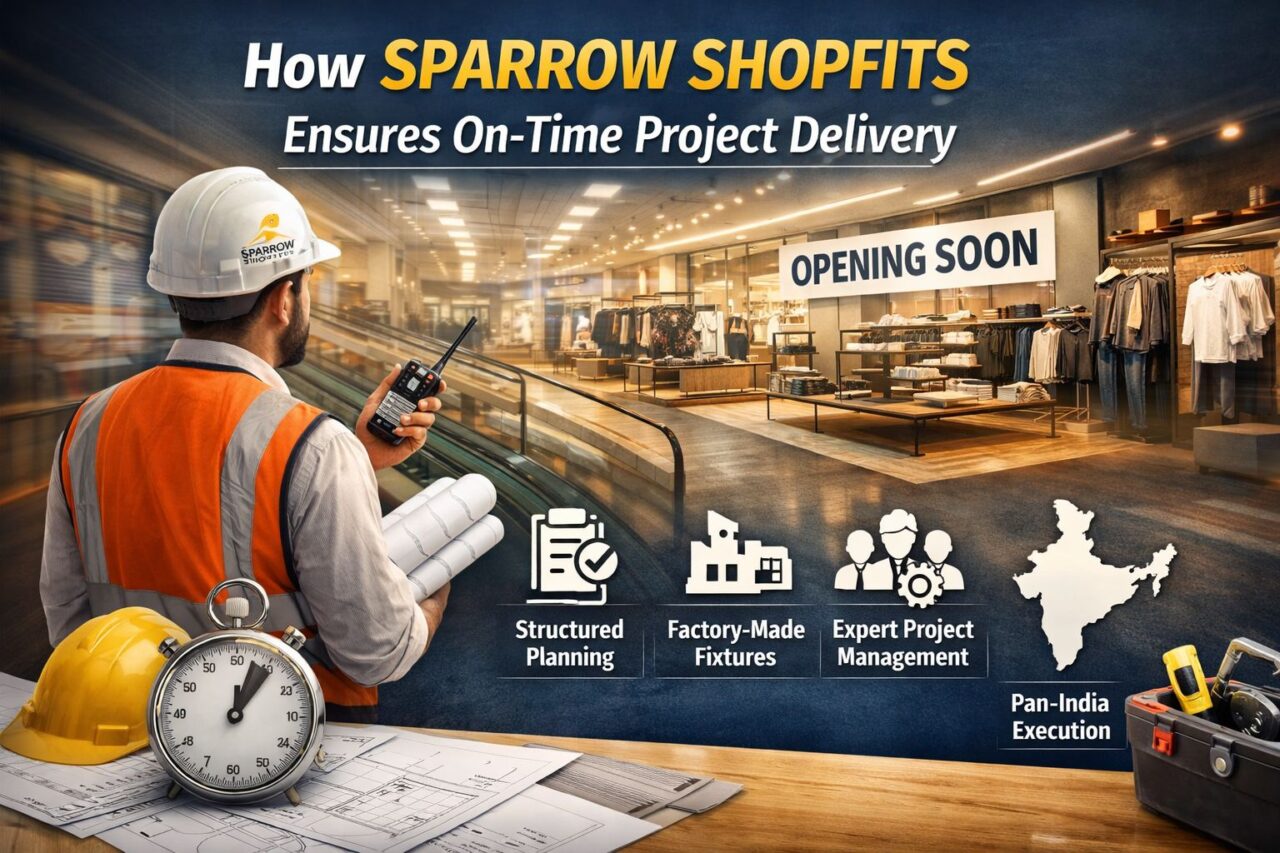
Sparrow Shopfits offers professional retail store execution services with structured planning, strong fabrication capability, mall-compliant processes, and predictable handover timelines—helping brands open stores on time and perform well from day one.